On your first visit to Prague, you should try authentic Czech food such as svíčková and goulash with knedlíky, and have a glass of fresh draft beer straight from the barrel. The souvenirs Thai travelers love to bring home are Kolonada wafers from the spa town of Karlovy Vary, Bohemian crystal glassware and handmade wooden marionettes. This article brings together the dishes, the kinds of restaurants worth going into, where to shop and the little bits of etiquette to know before you sit down at a table in the Czech Republic.
What Is Czech Food Like?
Czech food is the cuisine of a cold-climate country in Central Europe, centered on pork, beef, thick sauces and boiled dumplings called knedlíky, which look like slices of bread and are made specifically to soak up sauce. Overall it's a little salty, a bit rich and very filling, perfect for days spent walking around in the cold.
Traditional restaurants in Prague are usually called a hospoda or restaurace, with long wooden tables where locals sit with a beer alongside lunch. Many places offer a "lunch menu" (polední menu) that's cheaper than the regular menu. If you see this sign outside between noon and two in the afternoon, go right in.
Main Dishes to Order in a Czech Restaurant
Svíčková na smetaně (svíčková)
Tender braised beef in a pale orange creamy vegetable sauce made from carrots, celery and onions, served with knedlíky, cranberry jam and a little whipped cream. It sounds unusual but it all goes together beautifully. Czechs consider it a classic Sunday family meal.
Guláš (goulash)
A dark brown beef stew with plenty of paprika and onions. It originally comes from Hungary, but the Czech version is thicker and is more often eaten with knedlíky than as a soup. Some places serve it in a hollowed-out bread bowl. It's the safest choice for anyone not yet used to European food.
Vepřo knedlo zelo and roast pork knuckle, Vepřové koleno
The first is roast pork, dumplings and sauerkraut, all three on one plate. Koleno is a large roast pork knuckle with crispy skin, usually eaten with mustard and grated horseradish. One piece is enough for two people to share.
Snacks to Go with Beer
Try nakládaný hermelín, a soft cheese marinated in oil with chili and onions, or utopenec, sausages pickled in vinegar. Both are classic Czech pub snacks, and their sour, salty flavors cut through the richness nicely.
Czech Beer: A Culture to Try at Least Once
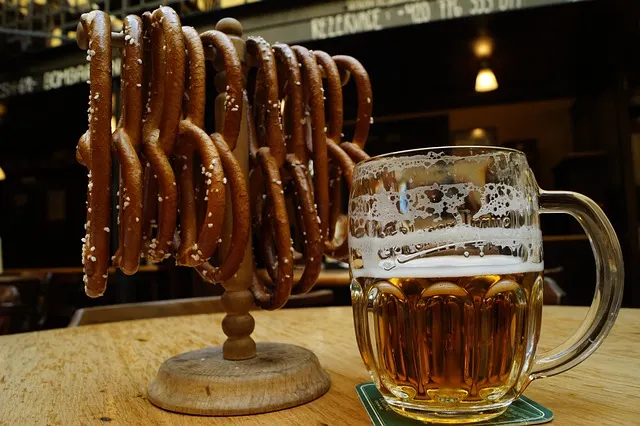
The Czech Republic has had the highest beer consumption per person in the world for many years running, and it's the birthplace of golden pilsner lager from the city of Plzeň in the west of the country. Another famous brand is Budweiser Budvar from České Budějovice in the south.
- Order like a Czech: Just say "velké" (a large half-liter glass) or "malé" (0.3 liters).
- Lots of foam doesn't mean you're being cheated: A mlíko is a glass that's almost entirely foam, sweet and soft, poured in the traditional way.
- Not drinking alcohol: Most places have non-alcoholic beer and local drinks such as Kofola, a Czech-style cola that locals love.
- Look people in the eye when you clink: Czechs say "Na zdraví!" and consider it proper to make eye contact when clinking glasses.
If you have half a day, a drive from Prague to the brewery in Plzeň makes a fun short trip, where you can see the underground fermentation cellars and taste unfiltered beer.
Desserts and Street Food in the Old Town
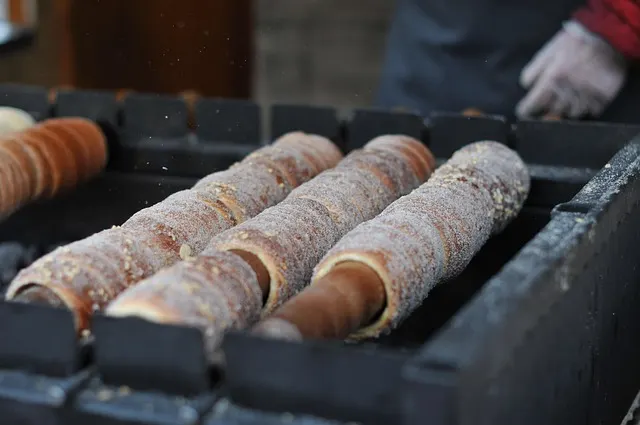
Trdelník is dough wrapped around a metal rod and turned over a fire, then rolled in sugar with cinnamon and almonds. You'll see it on almost every corner around Old Town Square. Worth knowing: it isn't actually a traditional Czech pastry. Its roots lie in the Slovakia and Hungary region, and it has become a tourist favorite in Prague. It's fun to eat and photographs beautifully, especially filled with ice cream in summer.
Genuinely Czech sweets worth trying in a café include větrník, a large cream puff topped with caramel, koláč, a pastry topped with cheese or poppy seeds, and ovocné knedlíky, fruit-filled dumplings topped with butter and sugar. Grilled sausage (klobása) from the stalls on Wenceslas Square makes a quick, filling meal for evening sightseers.
Czech Souvenirs Worth Buying, and Where to Buy Them
Kolonada Wafers and Lázeňské oplatky
These thin, round filled wafers originate from the spa towns of Karlovy Vary and Mariánské Lázně, where people taking the waters like to eat them with hot mineral water. Boxed Kolonada wafers are sold in supermarkets all over Prague. They're affordable, light, and great for handing out to the whole office. If you make it to Karlovy Vary, try the large freshly baked ones from the shops along the colonnade walkway too.
Bohemian Crystal
The Bohemia region has been making glassware for hundreds of years, and crystal wine glasses, vases and chandeliers make premium souvenirs. We recommend buying from brand stores or shops with certificates, because some shops on tourist streets sell imported glass. For large pieces, ask for protective packing, and ask about tax-free paperwork for purchases that meet the threshold.
Wooden Marionettes
Puppet theater is part of Czech cultural heritage dating back to the era when the Czech language was suppressed, so marionettes are both toys and a symbol of the mother tongue. Shops around Malá Strana and on the way up to Prague Castle sell witches, knights and cartoon characters. If you want a genuinely hand-carved piece, look at the wooden joints and the painted patterns, which differ on every figure.
Other Interesting Souvenirs
- Beer and mineral water cosmetics: Soaps, shampoos and creams made with brewer's yeast or hops, in cute packaging, great gifts for women.
- Becherovka herbal liqueur: A warm, spicy herbal liqueur from Karlovy Vary, available in small travel-size bottles (check the liquid limits for flights too).
- Krtek the little mole: A Czech cartoon known across generations, available as plush toys, socks and picture books.
- Supermarket snacks: Orion chocolate and Horalky and Tatranky wafers are inexpensive and sold at Albert, Billa or Lidl.
What to Know Before Eating and Shopping in Prague
- Currency: The Czech Republic uses the Czech koruna (CZK), not the euro. Most places take cards, but some small shops and market stalls take cash only. If the card machine asks you to choose a currency, choose CZK for a better rate.
- Be careful with exchange offices in tourist areas: Some display good rates but charge high fees, so ask how much you'll actually receive before handing over your money.
- Tipping: At sit-down restaurants it's customary to tip around 10%, by telling the server the total you'd like to pay when you settle the bill rather than leaving it on the table. Check the receipt first to see whether a service charge is already included.
- Bread and snacks on the table: Some places charge if you eat them, so if you didn't order them, don't touch them.
- Avoid restaurants on the big squares: Walk just a few streets away from Old Town Square and prices become more reasonable and the food closer to what locals eat.
- Shops on Sundays and holidays: City malls open almost every day, but some large stores close on public holidays. Plan to buy souvenirs before your last day for peace of mind.
- Christmas markets: From late November to early January, Old Town Square and Wenceslas Square host markets selling mulled wine (svařák), sweets and handicrafts, the most fun time of year for souvenir shopping.
Head Out of Prague to Taste Each Town's Specialties
Many of the dishes and souvenirs in this article come from outside the capital. If you're planning a multi-day Czech trip, try routing it via Plzeň for beer, Karlovy Vary for spa wafers and Becherovka, and Český Krumlov for riverside restaurants on the Vltava. These routes can be driven from Prague as a day trip or with a relaxed overnight stay, and traveling with a private car means heavy souvenirs like glassware are no trouble to carry.
In Summary
Prague is a city where eating and shopping are part of the sightseeing. Start with draft beer and goulash in an old wooden pub, follow with a hot trdelník on the street, then finish by packing wafers, crystal and marionettes to take home, and you'll have the full taste and memories of the Czech Republic.
Recommended Czech Private Tours
- CZE004 Exclusive Czech Republic in depth, 9 days 8 nights
- CZE018 Czech Republic in depth, 7 days 6 nights
- AUA003 Czech Republic - Austria - Hungary (Classic Eastern Europe), 8 days 7 nights
Want to travel the Czech Republic privately with See You Again? Ask us or request a quote via LINE 004207289999999, call 083-035-9755 or use our contact page. For a faster reply, reach us on LINE 004207289999999 or call 083 035 9755.
Planning it yourself?
What independent travellers usually book before they go, from providers that actually work

Partner links · we may earn a small commission when you book, your price stays the same